
UFC 5 damage system: health and cuts
UFC 5's damage system is the feature the series is named for in every preview, and it is more mechanical than it looks. There are three health pools, five damage-over-time states, a stack of status icons that change what your fighter can do, and a doctor who can end the fight without a knockout.
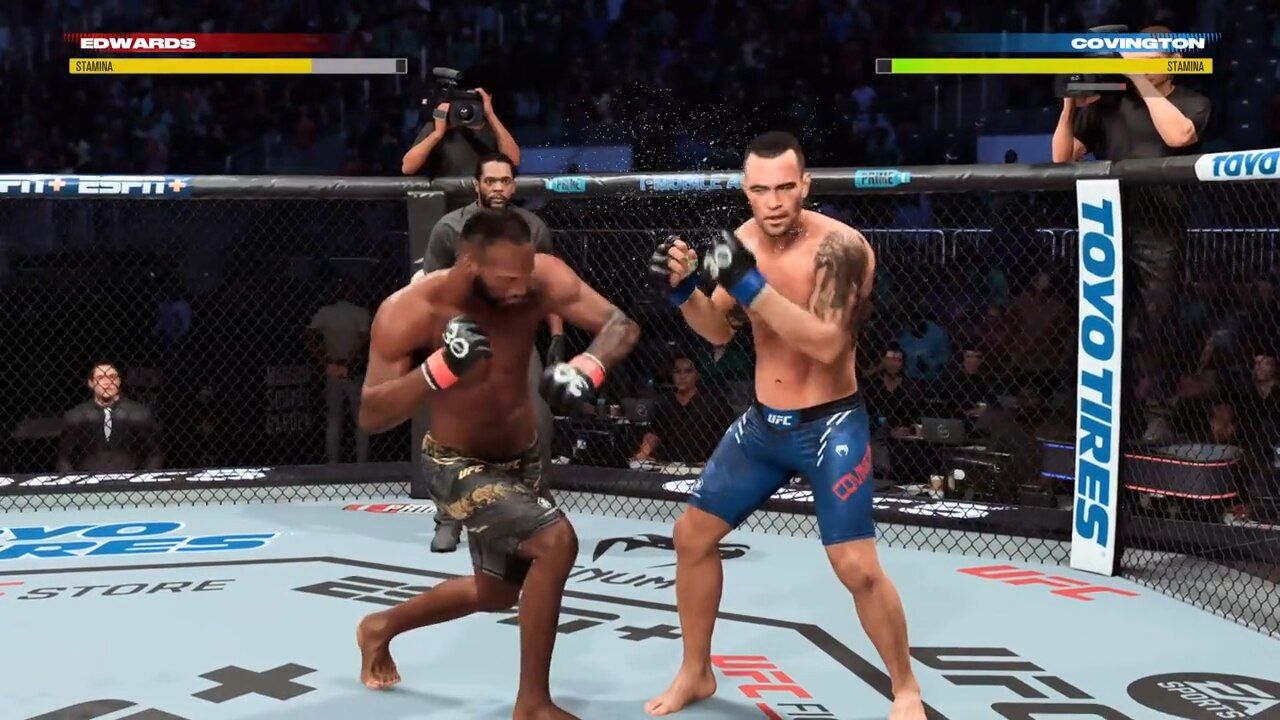
Three health pools, three recovery rates
| Pool | What drains it | Knockdown when empty | Recovery |
|---|---|---|---|
| Head health | Head strikes | Knockdown; severity depends on the final blow vs remaining health | Recovers automatically when you avoid head strikes |
| Body health | Body strikes | Body knockdown | Recovers during the fight and between rounds, slower than head |
| Leg health | Leg kicks and leg locks | Leg health event | Slowest of the three; leg kick damage does not recover over time |
The severity rule for head knockdowns is worth understanding: the damage of the final blow relative to how much health the opponent had left decides how bad the knockdown is. A knockout is not one big number — it is a ratio.
Health events
A health event is a stun, a rock, or a knockdown. Each head health event makes future health events both more likely and more severe. Two rocks in a round do not just cost you the round; they change the probability of the next one.
That is the mechanical reason a fighter who has been dropped twice should stop trading. The game is telling you the exchange is no longer even.
Status icons: what your HUD is actually saying
UFC 5 puts small icons in the health and stamina HUD, and each one is a rule.
| Icon | Trigger | Effect | Clears |
|---|---|---|---|
| Vision penalty | Cut or swelling on brow, forehead, eye or cheek | More damage taken on that side; stacks | 30 seconds without damage to that location, or a new round |
| Breathing penalty | Facial injury to nose or mouth | Current stamina recovery drops; stacks | Same 30 seconds or new round |
| Doctor stoppage | Any facial injury except mouth | The redder it gets, the closer the doctor is to stopping it | Does not clear |
| Head stun | Health event to the head | Marks the stun state | As the state ends |
| Body stun | Health event to the body | Marks the body stun | As the state ends |
| Leg stun | Health event to the leg | Marks the leg stun | As the state ends |
| Heart | Deep choke | Maximum Stamina loss | Persistent |
| Arm health | Deep arm submission | Maximum block health loss | Persistent |
| Leg health | Deep leg lock | Permanent leg health damage, counts as a health event | Persistent |
Two details in that table matter more than the rest. First, the vision and breathing penalties stack and they clear on a timer or at the bell — so surviving thirty seconds without taking more damage to the same spot is a real strategic goal, not a passive hope. Second, a mouth injury cannot cause a doctor stoppage, which means cuts to the mouth are cosmetic for stoppage purposes while brow and eye damage is not.
Doctor stoppages
Any facial injury except a mouth injury can bring the doctor in. The icon's colour is the meter: the more red it becomes, the closer the fight is to being stopped.
This creates a legitimate strategy that has nothing to do with health bars. A fighter who is losing on the feet can win by concentrating damage on one side of the face, forcing the doctor to look, and letting the cut do the work. Elbows are the standard tool: they cut, and they are available from the clinch and from top position.
Block damage
Blocking is not damage-free. Block Damage accumulates the more strikes you block in a row, and blocking multiple frontal strikes leaves you open to round strikes while blocking round strikes leaves you open to the front. The guard drifts toward the majority of the incoming strikes and the opposite lane opens.
This is why the correct defensive answer to sustained pressure is movement, not a held guard: the guard is a consumable.
Recovering damage: the threshold
Damage recovers automatically to a threshold, at a pace set by your Recovery attribute. The threshold itself is pushed down by the amount of damage and the number of health events you have taken.
In plain terms: a fighter who has been hurt a lot does not recover back to full — they recover to a lower ceiling. When that ceiling is low, the fighter is susceptible to being knocked out or stopped by strikes that would not have mattered in round one.
What this means for how you fight
- Spread your damage. Head, body and legs recover at different rates; the leg never really recovers.
- Chase the second event, not the first. A rocked opponent is more likely to be rocked again; that is the moment to press.
- Watch the icons, not just the bars. A vision penalty on the left side means head strikes from that side do more; a breathing penalty means their recovery is compromised.
- Use the doctor. Cuts are a win condition. If you cannot knock someone out, open a cut over the eye and keep hitting it.
- Respect your own threshold. If you have been dropped twice, your recovery ceiling is gone. Fighting at range is not cowardice, it is the only correct play.
Next: Stamina and health · Striking defense · Trophy guide